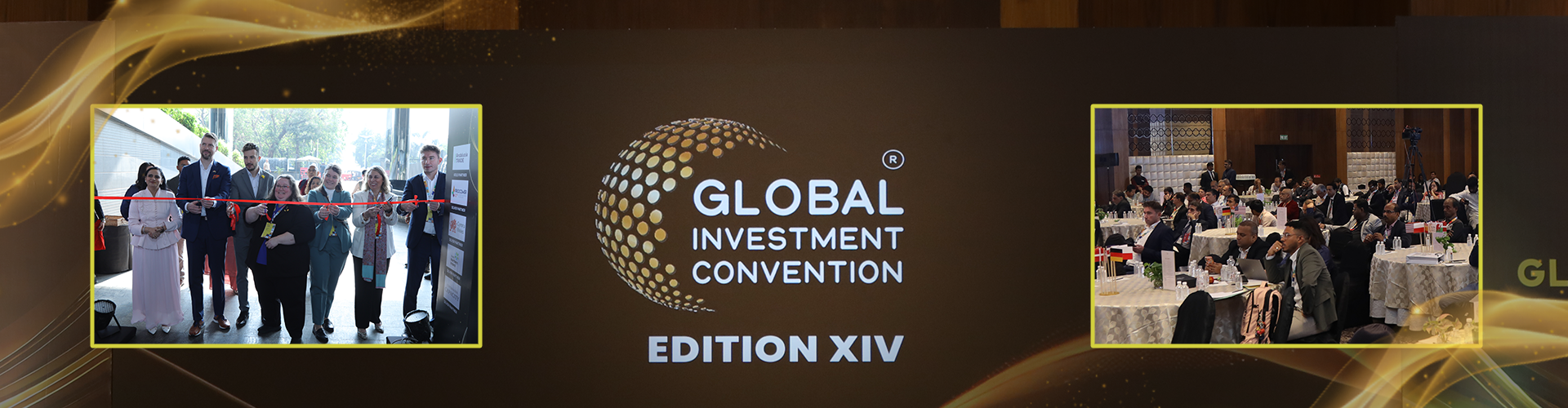
There is no shortage of international investment conferences. Each year, summits, forums, and conclaves compete for the attention of investors, government delegations, investment promotion agencies, and business leaders. Yet many of these events are built primarily for visibility and prestige, not for structured, measurable investment outcomes.
The Global Investment Convention (GIC), now in its 15th edition, has been designed to address that gap. As presented on the official GIC website, the convention brings together investment promotion agencies, government representatives, global investors, corporates, and industry leaders to explore new markets and foster international collaboration.
This article compares GIC with other major investment conferences and explains why its format, audience, and outcomes set it apart.
Before comparing GIC with other platforms, it is useful to understand the main categories of international investment conferences. Each serves a different purpose, audience, and investment corridor.
Global prestige forums such as the World Economic Forum at Davos bring together heads of state, senior policymakers, and large global corporations. These are highly influential gatherings, but they are often difficult to access and are not designed primarily for bilateral investment matchmaking.
Government-organised investment summits such as Vibrant Gujarat and state-level Global Investors’ Meets focus on attracting inbound foreign direct investment into a particular state, sector, or region. These events are effective within their own mandate, but their scope is usually geographically specific.
Regional investment meetings such as the UAE Annual Investment Meeting in Dubai, the ASEAN Business and Investment Summit, and Saudi investment forums tend to serve a defined regional ecosystem and investment corridor.
Multilateral policy forums such as the UNCTAD World Investment Forum are important for policy dialogue, credibility, and regulatory exchange. However, they are generally less commercially focused than bilateral deal-making platforms.
GIC sits differently within this landscape. It is not limited to one geography, one sector, or one policy agenda. Instead, it is structured as a platform for cross-border investment dialogue, partnership building, and business expansion across multiple corridors.
The World Economic Forum in Davos is one of the most recognized convening platforms in global business. It attracts top political leaders, Fortune 500 executives, and senior policymakers from around the world.
However, for many companies, especially Indian SMEs, mid-sized manufacturers, emerging market delegations, and investment promotion agencies, Davos is not an operationally practical platform. It is high-profile, high-cost, and relationship-driven, with outcomes that often unfold over long timelines rather than through structured commercial engagement.
GIC is designed for a different kind of participant and a different kind of result. Its model is built around pre-qualified bilateral meetings, targeted discussions, and follow-up opportunities between investors, businesses, government bodies, and investment promotion agencies.
For organizations seeking practical cross-border engagement rather than prestige alone, GIC offers a more focused and accessible environment.
The UAE Annual Investment Meeting in Dubai is one of the closest structural comparisons to GIC. It is a large-scale investment platform with a global audience and a strong focus on foreign direct investment, international partnerships, and market access.
Its strength lies in its broad geographic reach and its role within the Middle East-centered investment ecosystem. By contrast, GIC is more specifically aligned to India-centered and South-South investment corridors, including India-Europe, India-Africa, India-Middle East, India-Southeast Asia, and India-Central Asia.
For Indian companies seeking international expansion, for overseas governments looking to attract Indian investors, and for IPAs seeking targeted bilateral engagement, GIC provides a more concentrated platform.
Its value lies not in scale alone, but in relevance, preparedness, and investment intent.
Vibrant Gujarat is one of India’s most prominent investment summits. It is government-backed, highly visible, and strongly associated with attracting investment into Gujarat’s industrial, manufacturing, and infrastructure sectors.
That makes it highly effective for its core objective. However, it is also state-specific and primarily designed to attract inbound investment into one geography.
GIC serves a broader purpose. It is sector-agnostic, geography-agnostic, and bidirectional. Rather than focusing only on one state or one type of investor, it creates a platform where businesses, governments, and investment promotion agencies can explore partnerships across multiple sectors and markets.
A German manufacturer seeking Indian partners, an Indian company exploring Europe, and an African IPA looking for Indian investors all have a place at GIC.
The UNCTAD World Investment Forum is a respected multilateral platform supported by the United Nations. It brings together senior policymakers, ministers, regulators, and international institutions to discuss global investment trends and policy priorities.
Its role is important, but it is fundamentally more policy-oriented than commercially transactional. The emphasis is on declarations, frameworks, and high-level investment dialogue rather than structured business matchmaking.
GIC fills a different need. It is designed to connect public and private sector participants in a format that can support tangible business outcomes.
For organizations that want both institutional credibility and commercial engagement, GIC provides a practical bridge between policy dialogue and investment action.
The most important differences are not just about geography or branding. They are structural differences in how the event is designed and how participants engage with one another.
Successful international expansion depends on more than attending business events—it depends on meeting the right people, having meaningful conversations, and building relationships that can lead to long-term opportunities.
The Global Investment Convention (GIC) is designed to bring together investors, Investment Promotion Agencies (IPAs), government authorities, business leaders, and industry experts on a single platform.
Rather than focusing only on networking, GIC encourages practical discussions around investment, market entry, strategic partnerships, and international business growth.
Whether you are a company exploring new markets, an investment promotion agency seeking foreign investment, or a government organisation promoting regional opportunities, GIC provides a structured environment to connect with relevant stakeholders and explore potential collaborations.
GIC XV will take place in Bengaluru, India, from 15–17 February 2027, bringing together participants from around the world to exchange ideas, build partnerships, and explore new investment opportunities across key industries.
Contact the Global Investment Convention team to discuss participation options for businesses, government bodies, and investment promotion agencies.